
2026-02-24 / News
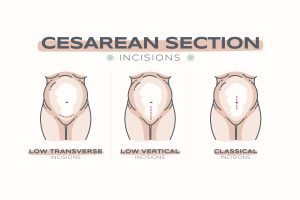
Illustration of different caesarean section incision types, highlighting the importance of comparable data and standardised perinatal care. © FREEP!K
Large differences in how caesarean sections are used across Europe point to variation in perinatal care. These differences raise questions about how consistently evidence-based care is applied. Caesarean section is a common procedure that can affect maternal and newborn health outcomes. Standardised perinatal care is essential to ensure that evidence-based practice is applied consistently across settings. This joint statement reviews how caesarean section data are collected and compared in Europe. It is written for parents, families, and health professionals involved in pregnancy and newborn care. The paper shows that stronger, shared data standards are needed to support safer and more consistent care.
Differences in caesarean section rates between European countries are wide. Countries with similar resources report very different levels of intervention. This makes it hard to judge whether care is aligned with evidence and standards. Improving standardised perinatal care depends on understanding these gaps.
The paper examines how existing European and international data sources report caesarean section rates. It compares routinely used indicators and highlights their limits. The focus is on whether current data allow meaningful comparison and evaluation of care.
The authors show that current international data mainly report overall caesarean section rates. These figures vary widely, from low to very high levels across Europe. However, basic rates do not explain why these differences exist. Important details, such as timing, indication, and population characteristics, are often missing. Without shared definitions, comparisons can be misleading. Standardised perinatal care needs comparable data to support evaluation and improvement.
The paper also highlights differences between data sources. Some count women, others count births. Definitions of elective and emergency procedures vary. Missing or incomplete information further limits comparison. These inconsistencies reduce the usefulness of data for improving care quality.
Clearer data standards can support better conversations about care. When health professionals have reliable information, they can reflect on practice and align care with evidence. Parents and families benefit from more transparent and comparable care approaches. Shared standards help support informed decision-making across settings.
Improving data systems is a key step towards more consistent care. The authors encourage discussion about how caesarean section data are collected and used. Greater awareness of care standards can help drive quality improvement across Europe.
Paper available at: European Journal of Obstetrics & Gynecology and Reproductive Biology
Full list of authors: Velebil, P; Durox, M; Zeitlin, J; Mahmood, T; Euro-Peristat Research Group
DOI: 10.1016/j.ejogrb.2025.02.056
You are currently viewing a placeholder content from Facebook. To access the actual content, click the button below. Please note that doing so will share data with third-party providers.
More InformationYou are currently viewing a placeholder content from Instagram. To access the actual content, click the button below. Please note that doing so will share data with third-party providers.
More InformationYou are currently viewing a placeholder content from X. To access the actual content, click the button below. Please note that doing so will share data with third-party providers.
More Information