
2026-01-26 / News
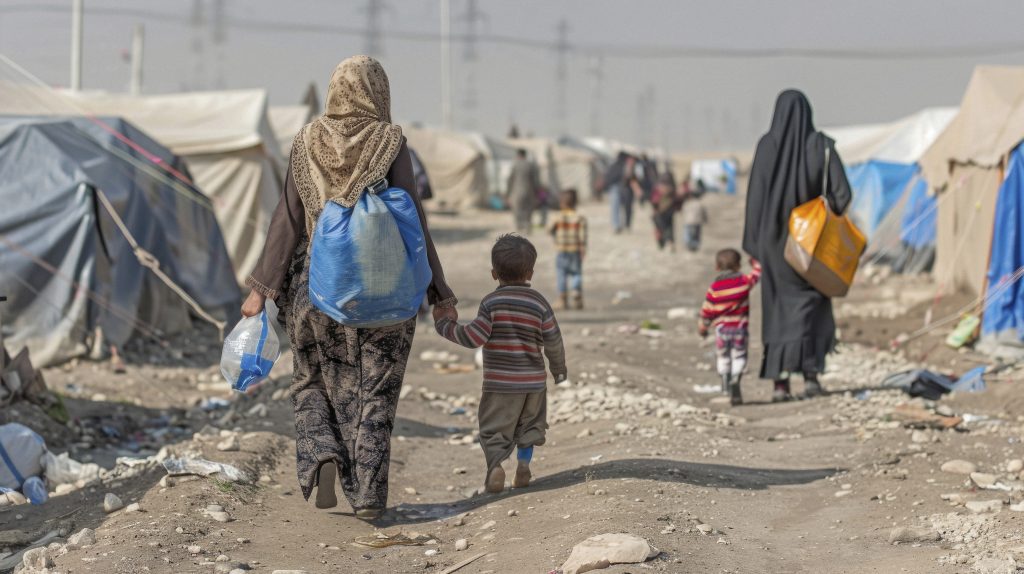
Displaced women and children walk through a temporary refugee camp, illustrating the ongoing humanitarian crisis and its impact on vulnerable families. © FREEP!K
Access to consistent, high-quality pregnancy and newborn care can vary widely between populations. Differences in care pathways may affect health outcomes for mothers and newborns, especially in vulnerable groups. Standardised newborn care aims to reduce these gaps by ensuring the same level of care across settings. This is particularly important for families who face barriers in navigating health systems. This Research News is relevant for parents, families, and health professionals involved in pregnancy and newborn care. It highlights evidence showing where care is uneven and why aligning care standards matters for equity.
Differences in pregnancy and newborn care are often linked to where people live and their social circumstances. Refugee families may experience gaps in access to services that are routinely available to others. Standardised newborn care can help reduce these differences by defining clear expectations for care. In this context, standardised newborn care supports fairness and safety for all families.
The featured study reviews existing research on maternal and newborn health among Syrian refugees living in Turkey. It compares health indicators between refugee and non-refugee populations using published studies. The aim was to identify inequalities in access to care and health outcomes related to pregnancy and the newborn period.
The review found clear differences in access to antenatal care between refugee and non-refugee women. Refugee women were less likely to receive at least four antenatal care visits during pregnancy. They were also less likely to receive iron supplementation and more likely to experience anaemia in late pregnancy. Adolescent pregnancy and home birth were more common among refugees. These findings point to gaps in how consistently care standards are applied. Strengthening standardised care pathways could help ensure timely and appropriate care for all pregnant women and newborns.
Some outcomes did not differ between groups, showing that variation is not universal. Rates of preterm birth, low birth weight, stillbirth, and neonatal intensive care admission were similar. Refugee women had lower rates , which the review links mainly to differences in maternal age rather than care quality. These mixed findings highlight that equity in care is complex. Standardised care can help focus attention on areas where gaps are most evident.
For parents and families, the findings highlight how difficult it can be to access recommended care when information, language support, or services are not consistently available. Clear and well-communicated standards can help health systems support families more effectively, rather than placing responsibility on parents alone. Shared standards can help reduce missed care opportunities and improve communication across services.
Improving equity starts with recognising variation in care. Discussing care standards with health teams can support more consistent practice. Learning from this evidence can help move towards fairer, high-quality care for every newborn and family.
Paper available at: Maternal and newborn health inequality among Syrian refugees in Turkey: a systematic review and meta-analysis
Full list of authors: Hakimi, S; Ceber Turfan, E; Allahqoli, L; Ahmadi, M; Sogukpinar, N; Demirelöz Akyüz, M; Mehrabi, E; Rahmani, A; Alkatout, I
You are currently viewing a placeholder content from Facebook. To access the actual content, click the button below. Please note that doing so will share data with third-party providers.
More InformationYou are currently viewing a placeholder content from Instagram. To access the actual content, click the button below. Please note that doing so will share data with third-party providers.
More InformationYou are currently viewing a placeholder content from X. To access the actual content, click the button below. Please note that doing so will share data with third-party providers.
More Information